

Monkton homeowners know that Maryland weather can turn quickly, from heavy spring downpours to icy winter storms. When gutters stop doing their job, all that water has to go somewhere. Often, it ends up exactly where you don’t want it: your foundation, your roof, or your basement. If you’ve noticed pooling water near your home or damp spots on your ceiling, understanding gutter water damage is the first step toward protecting your investment.
What Causes Gutter Water Damage in the First Place?
Gutter water damage happens when gutters can’t move water away from your home efficiently. This usually comes down to a few common culprits. Clogged gutters filled with leaves and debris cause water to overflow instead of flowing through the downspouts. Sagging or improperly pitched gutters let water pool instead of draining. Cracks, rust, or loose seams let water escape before it reaches the ground.
Once water escapes where it shouldn’t, it doesn’t just disappear. It seeps into siding, soaks into soil near your foundation, and finds its way into small gaps around windows and doors. Over time, this constant exposure wears down materials that were never designed to handle standing water.
How Does Foundation Damage from Gutters Happen?
Foundation damage from gutters is one of the most serious and costly problems homeowners face. When gutters overflow or downspouts dump water too close to the house, that water saturates the soil around your foundation. Saturated soil expands and contracts as it dries, which puts pressure on foundation walls.
Over months and years, this pressure can cause:
- Cracks in foundation walls
- Uneven settling
- Bowing basement walls
- Gaps around basement windows and doors
These problems rarely show up overnight. They build slowly, which is why many homeowners don’t notice the connection between their gutters and their foundation until repairs become expensive.
What Does Roof Water Damage from Gutters Look Like?
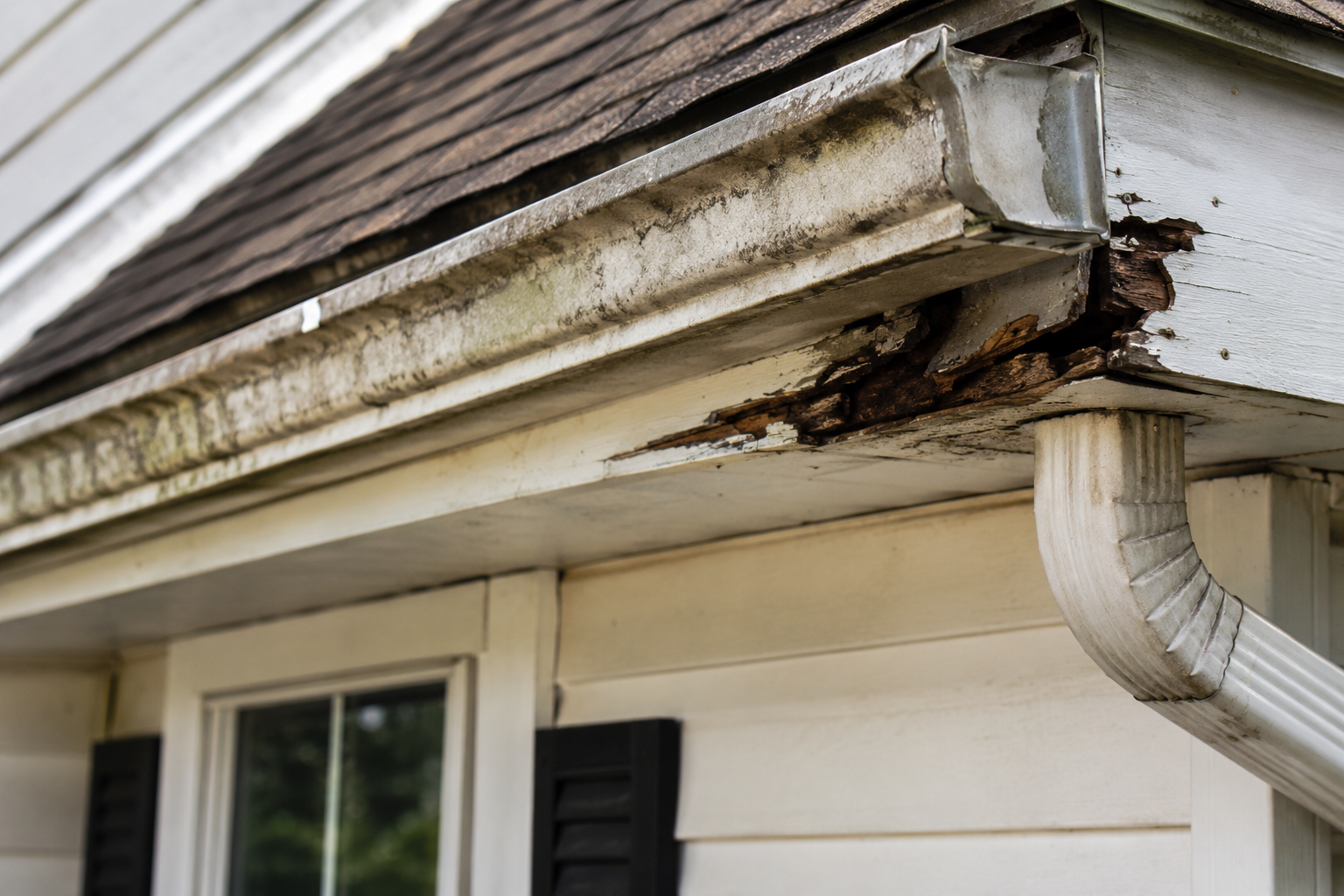
Roof water damage often starts at the edges, right where your gutters meet your roofline. When gutters are clogged or damaged, water backs up under roof shingles instead of flowing away. This trapped moisture can rot the wood decking beneath your shingles, damage fascia boards, and create the perfect environment for mold growth.
You might notice warped shingles, dark stains along the roofline, or even sagging sections of your roof. In colder months, backed-up water can freeze and form ice dams, which push water even further under your shingles and worsen the damage.
Can Gutter Problems Lead to Basement Leaks?
Yes, and it’s more common than most homeowners expect. Basement leaks often trace back to poor gutter performance. When downspouts release water too close to your home, or when gutters overflow during heavy rain, that excess water travels straight down toward your foundation. From there, it finds cracks, gaps, or porous concrete and works its way into your basement.
Signs of gutter-related basement leaks include musty odors, visible water stains on walls, peeling paint, or actual puddles after storms. Left unaddressed, this moisture can lead to mold growth and structural issues that are far more expensive to fix than the original gutter problem.
Why Early Action Matters
The good news is that gutter water damage is preventable. Regular inspections catch small issues, like a loose seam or a slight sag, before they turn into foundation cracks or roof rot. If your gutters are already showing signs of wear, a professional repair can often resolve the issue before it spreads to other parts of your home. For homes with outdated or undersized systems, upgrading to a seamless gutter installation can reduce leaks, clogs, and seams that tend to fail over time.
Frequently Asked Questions
How do I know if my gutters are causing water damage?
Look for peeling paint near your roofline, water stains on siding, pooling water near your foundation, or damp spots in your basement after rain. These are common early signs.
Can gutter damage really affect my foundation?
Yes. When gutters overflow or downspouts release water too close to your home, the soil around your foundation becomes oversaturated. This can lead to cracks and settling over time.
How often should gutters be inspected to prevent water damage?
Most experts recommend inspecting gutters at least twice a year, in spring and fall, and after major storms to catch clogs or damage early.
Protect Your Home Before Water Damage Spreads
Gutter problems rarely stay small. What starts as a minor clog or a small crack can quietly turn into foundation damage, roof rot, or a flooded basement. If you’ve noticed warning signs around your Monkton home, don’t wait for the next storm to find out how bad it’s gotten. The team at The Brothers That Just Do Gutters is ready to inspect your system, make repairs, or install a seamless gutter solution built to handle Maryland weather. Schedule your free inspection today and give your home the protection it deserves.
Posted on June 30, 2026 | Published by Ignite Local | Related Local Business